Copy the address above if your email client does not open automatically.
Pilon Laboratories Cryptographic Engine
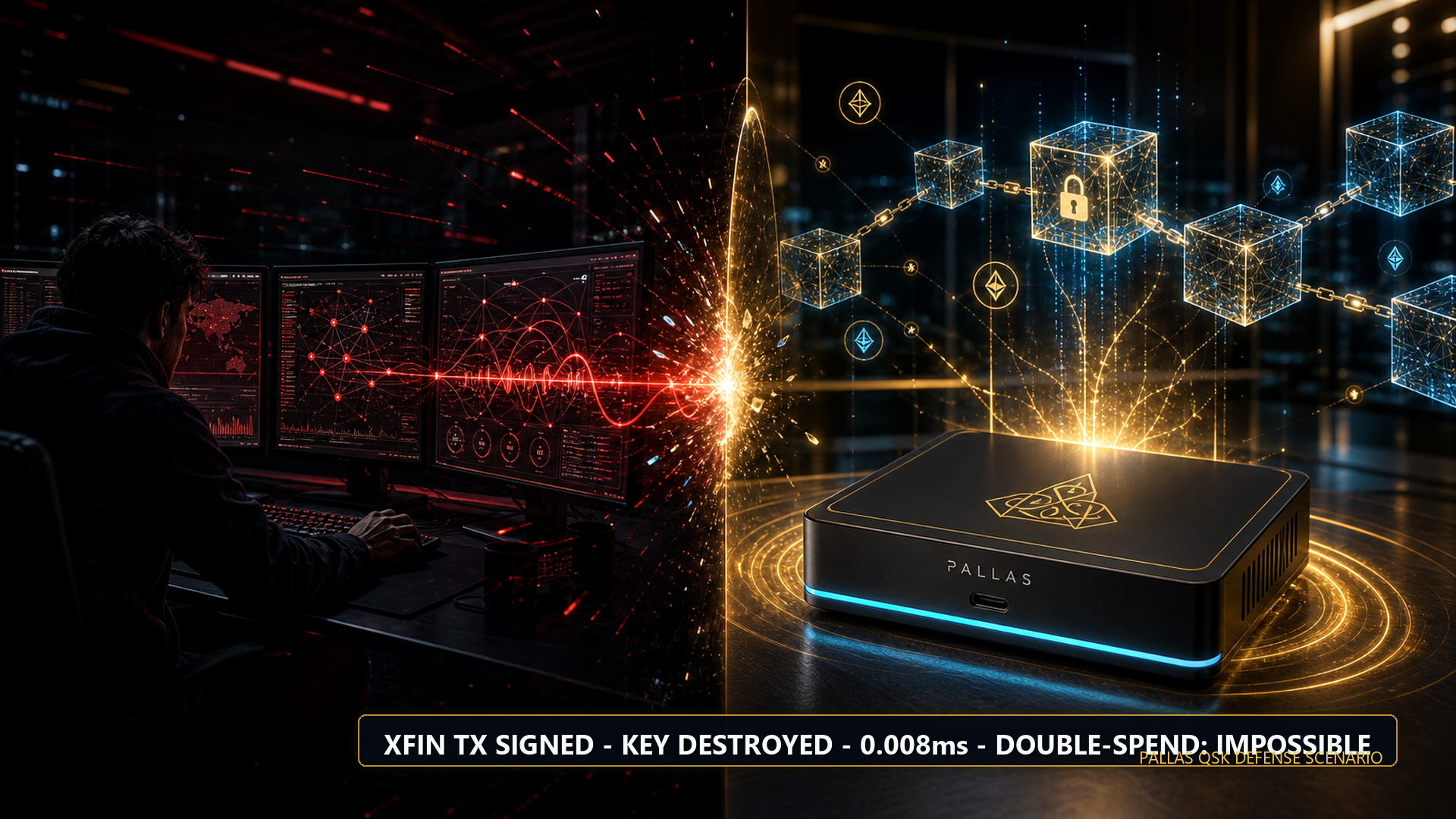
A patent-pending post-quantum signing architecture with Chrono-Isolated Secrecy™ — no private key persists before or after the authorization window. No identified prior art as of CIPO filing date (April 2026). Built for the HNDL threat environment financial institutions can no longer defer.
Live Benchmark — Software MVP · Node.js · Commodity Hardware
Full 1,000-ceremony concurrency matrix (CSPRNG × 4 levels + NIST Beacon × 2 levels) · 4,200 total ceremonies · commodity hardware · no hardware crypto acceleration.
Technical Documentation
Technical abstract and live benchmark report for CQRO and security architecture evaluation. View in-browser or download as PDF.
Exec Demo System
Interactive simulation of a $49.5M interbank SWIFT authorization processed through the PALLAS QSK cryptographic ceremony pipeline. All timings are empirically measured — no synthetic values.
Without PALLAS
NIST's standardized lattice-based algorithms are mathematically massive compared to the RSA and ECDSA primitives that legacy banking infrastructure was engineered around. Attempting to swap ML-DSA-87 directly into existing core payment pipelines triggers three cascading infrastructure failures — before a single line of business logic changes.
PQC Data Inflation — The Rail Bottleneck
| Algorithm | Public Key | Signature | Total Overhead | Legacy Rail Impact |
|---|---|---|---|---|
| ECDSA P-256 · Classical | 64 B | 64 B | 128 B | Ultra-lightweight. Fits anywhere. |
| RSA-2048 · Legacy Standard | 256 B | 256 B | 512 B | Compact. Fits legacy field sizes. |
| ML-DSA-87 · Native swap-in (competitor path) | 2,592 B | 4,595 B | 7,187 B | 14× inflation. Rails collapse. |
| ML-DSA-87 · PALLAS metadata overlay | 2,592 B | 4,595 B | 7,187 B | Non-breaking external header. Zero rail modification. |
The cryptographic overhead of ML-DSA-87 is identical regardless of integration method. The architectural question is where that overhead lands — inside legacy rails (catastrophic) or as an external non-breaking authorization header (zero disruption).
The Three Rail Failure Vectors — Why a Native PQC Swap-In Fails
Legacy middleware commonly hardcodes security token fields to VARCHAR(512). Forcing a 4,595-byte ML-DSA-87 signature into a 512-byte column triggers immediate data truncation, corrupted audit logs, and database crashes. Remediating every security-bearing field across a global bank's 200+ internal systems costs hundreds of millions and takes years.
A complete ML-DSA-87 auth payload (7,187 bytes) exceeds the standard MTU of 1,500 bytes by nearly 5×. Every transaction becomes a fragmented multi-packet sequence — triggering retransmission storms, out-of-order delivery, and severe latency spikes across SWIFT parsing engines where sub-millisecond timing is a regulatory requirement.
Classical rack HSMs (Thales Luna, nShield, IBM 4769) use ASICs hardcoded for elliptic-curve math, not polynomial matrix arithmetic. Patching via software forces emulation mode — verified throughput collapses up to 90% TPS. For a Tier-1 institution at 50,000+ TPS, this is systemic capacity failure. Full fleet HSM replacement: $200M–$1.5B in hardware alone before software remediation.
The PALLAS authorization token attaches as a non-breaking JSON header. SWIFT MT103/MT202, Fedwire, LYNX, SEPA, and ACH formats are entirely untouched. No database schema modification required anywhere in your infrastructure.
All ML-DSA-87 polynomial arithmetic runs natively on the Infineon SLC27 TEGRION EAL6+ secure element or the sandboxed SDK container. Your core banking servers never touch the computation — zero CPU degradation, zero TPS impact.
Sandbox Evaluation: $70,000 — Full SDK access, benchmarks, air-gapped testing. Costs less than one classical HSM unit. For architectural evaluation only. Pre-FIPS 140-3 certification; not approved for regulated authorization pipeline deployment.
Regional Software License: $1,500,000/yr — Full API, all algorithms, enterprise SLA. ML-DSA-87 on your existing servers. Zero rail modification. Zero hardware required.
Regional Standard + HSM: $2,500,000/yr + hardware — SLC27 TEGRION offloads all lattice arithmetic at sub-millisecond native speed. Zero compute load on core banking infrastructure.
Global Uncapped License: $3,500,000/yr + hardware — Institution-wide, all regions, unlimited deployment. Full FIPS 140-3 Level 3 hardware-enforced CIS. The $2–5B overhaul becomes a rounding error.
Universal Zero-Trust Authentication
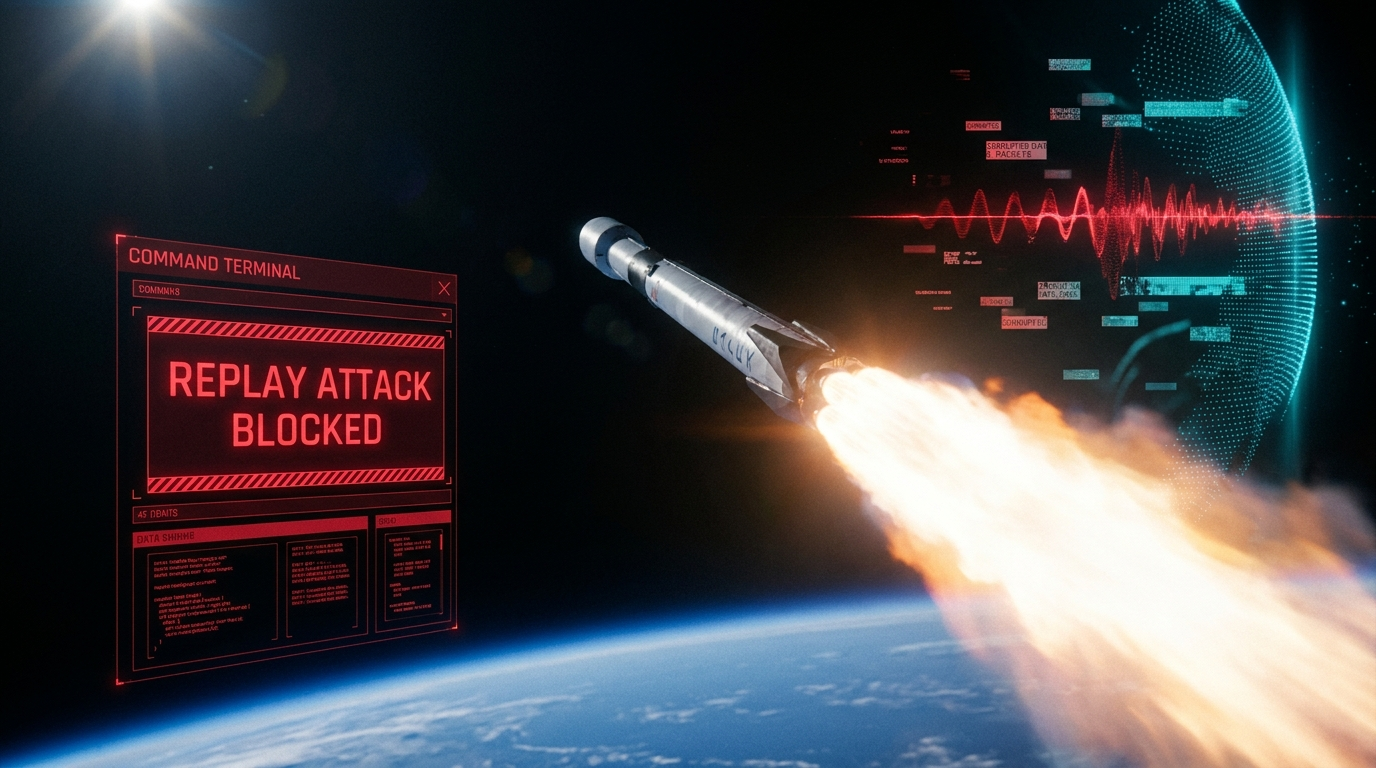
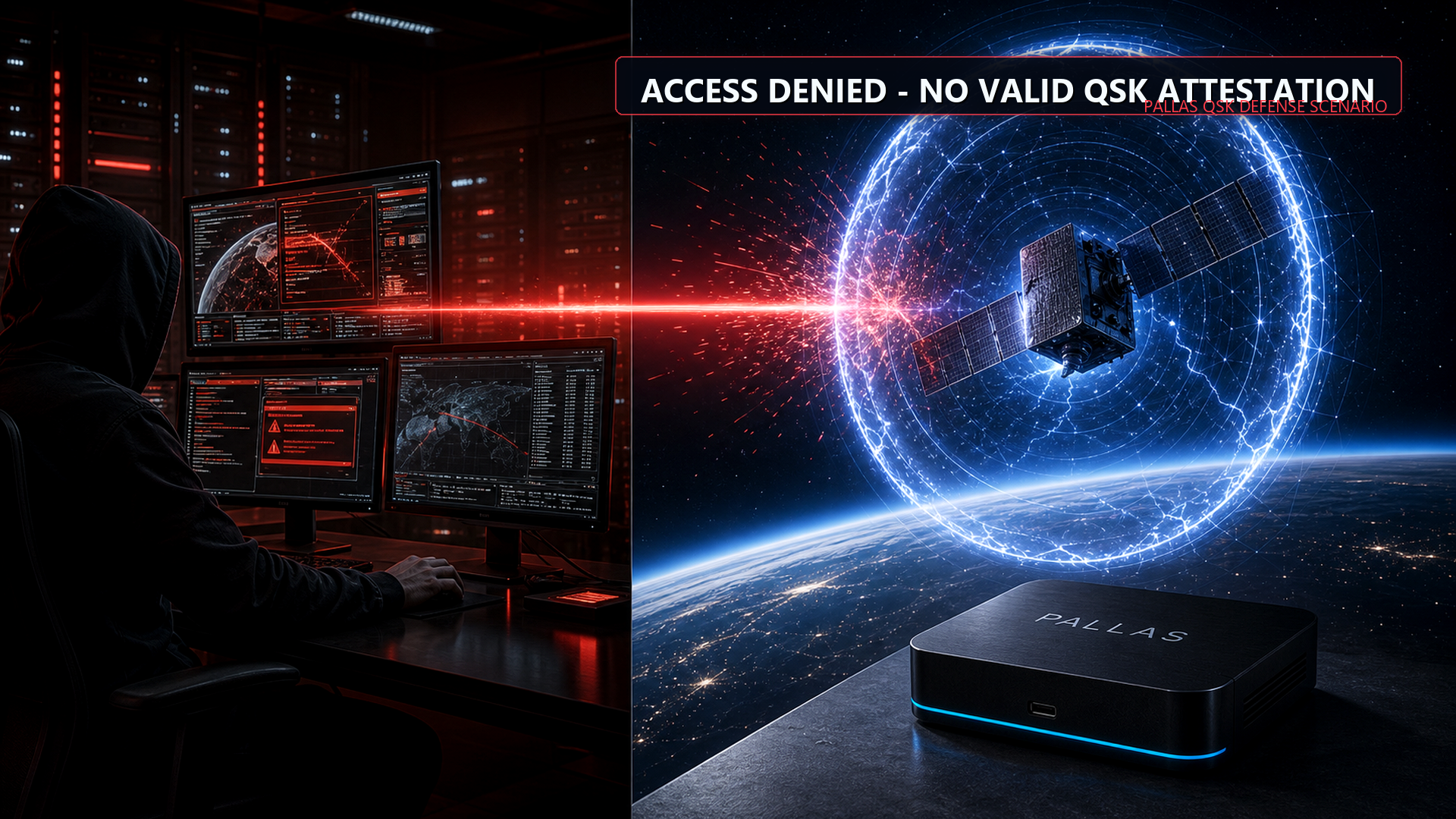
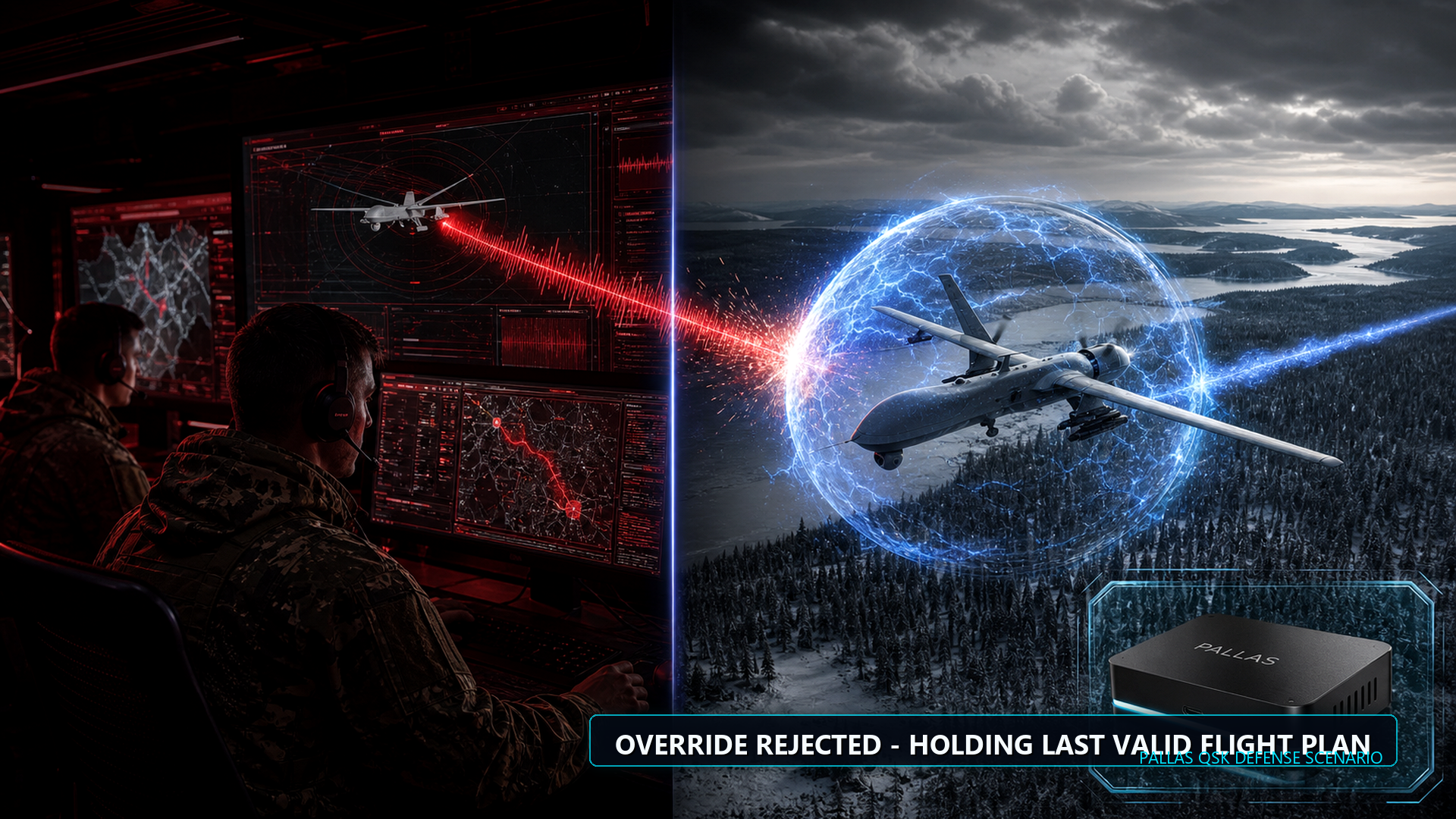
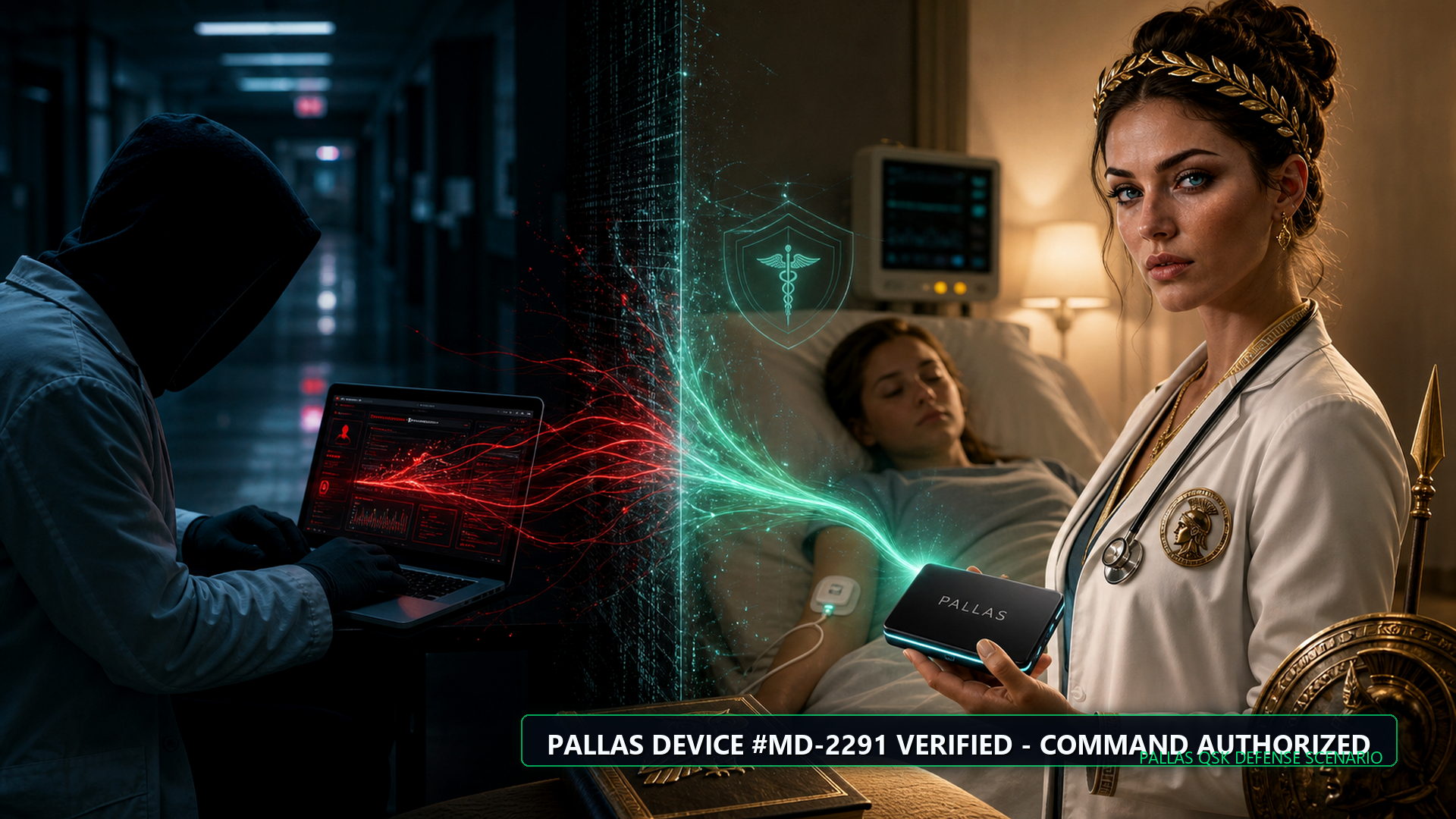
While PALLAS is optimized for high-volume financial transaction authorization, the QSK engine is a generalized, zero-trust cryptographic primitive for any critical perimeter where a command must be issued, verified, and never replayed. The core property — key material that exists for under 0.01ms and is architecturally destroyed upon use — eliminates the concept of a harvestable attack surface regardless of the infrastructure domain.
Enterprise Deployment Matrix
All prices USD. Sandbox Evaluation fee ($70,000) credited in full against Year 1 Regional Software License upon agreement execution within 30 days of successful pilot close. Regional Software License fees credited in full against Year 1 Regional Standard + HSM or Global Uncapped License costs. Pre-certification pricing for early-adopter access. FIPS 140-3 Level 3 certification pathway in progress. Hardware delivery Q2 2027. Global Uncapped License includes unlimited institutional deployment rights with no per-site or per-region cap.